
TAM ON THE RADAR
From Darkness to Pink: Dmitrii Polikarpov Finds His Own Language in Tattooing
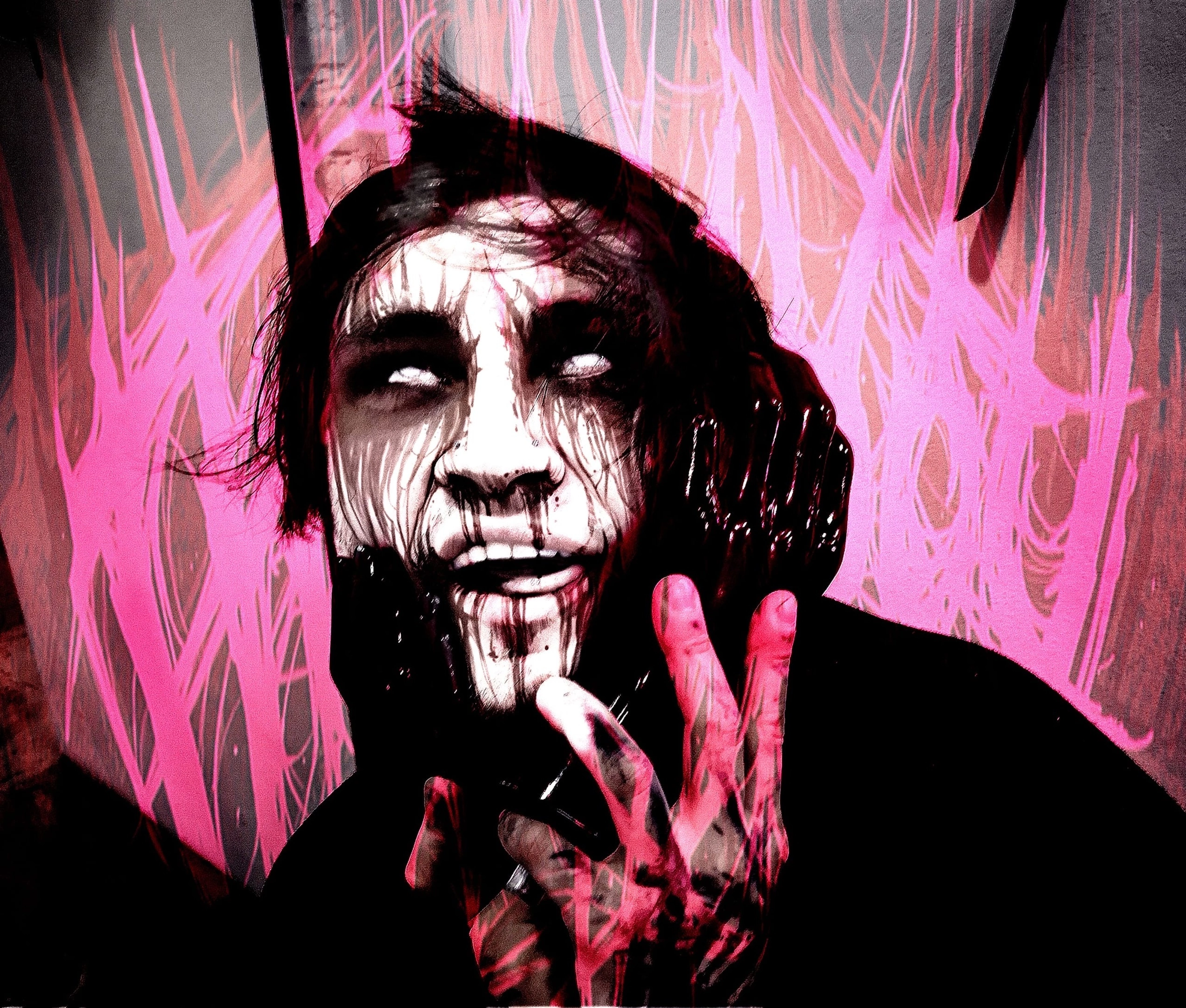
Known throughout the tattoo world as @tornboy_tattoo, Dmitrii Polikarpov has spent more than a decade building work that is dark, emotional, organic and unmistakably his.
By Mary Marvel
Tattoo Artist Magazine
Dmitrii Polikarpov did not arrive at his signature style by following a straight line.
Before tattooing became his life, he worked in a typography shop cutting paper, completed an accelerated graphic-design program, worked as a designer in a copy center, and studied architecture before leaving during his second year.
Each experience added something to his visual foundation, but none offered the independence he was searching for.
“I found out that only by following my dream could I be happy,” Dmitrii says. “I couldn’t have someone as my boss forever.”
He first picked up a tattoo machine at 18 and began tattooing professionally in 2014. His first year was spent working from a home studio in Yekaterinburg, Russia. Even at that early stage, he approached the work seriously, investing in professional equipment, including an autoclave, and learning how to build a responsible working environment.
After a year, Dmitrii left Yekaterinburg for St. Petersburg. He wanted more than the isolation of working alone, he wanted to become part of a larger tattoo community.
That move opened the door to international travel and a wider understanding of tattoo culture. In 2017, his path took him to Poland. He later returned to Russia in 2019 while preparing to apply for a German artist visa.
Then the world stopped.
The COVID-19 pandemic kept Dmitrii in St. Petersburg far longer than expected. That period of uncertainty also became one of artistic transformation. It was there that the visual language now associated with Tornboy began to take shape.
Before 2019, Dmitrii worked primarily in colorful neo-traditional tattooing. Over time, however, the range of color began to feel creatively restrictive rather than freeing.
He felt, in his words, “strangled by the colors.”
Dmitrii returned to the dark graphic work that felt more natural to him, but he also wanted to create something that separated his tattoos from the growing field of blackwork and graphic artists. The answer came in the form of vivid pink.
Placed against heavy black, the color does not soften his work. It disrupts it.
Pink moves through Dmitrii’s tattoos like light, exposed tissue, energy or a signal beneath the surface. The contrast became a defining element of his work, giving his dark imagery an identity that can be recognized before his name is ever attached to it.
His style continued evolving through experimentation. During a particularly difficult personal period, or what he described as being in a “deeeep hole” Dmitrii began developing his organic project. The work became less concerned with perfect lines or decoration and more focused on movement, texture and feeling.
“So you move towards emotions,” he explains. “You move away from focusing only on lines and design.”
That shift changed more than the appearance of his tattoos. It changed what Dmitrii wanted the work to do.
“My wish is to have tattoos that have some emotions inside,” he says. “They can even be without any meaning, but they should feel like yours…you should feel something when you look at them.”
For Dmitrii, a tattoo does not require a complicated explanation to hold value. Meaning can come from the emotional response it creates, the way it changes a person’s relationship with their body, or the feeling it gives them when they see themselves differently.
He imagines tattoos as a form of armor. A visual boundary between the wearer and the outside world.
“Tattoos can feel like a safety layer for most of us.”
That idea is visible throughout his portfolio. His tattoos feel protective and vulnerable at the same time. The imagery is often dark and aggressive, but the movement within it feels alive. Black shapes stretch across the body while flashes of pink break through, creating pieces that appear to grow rather than simply sit on the skin.
Today, Dmitrii is based in Berlin and works from Der Grimm Tattoo Shop, which he describes as one of Europe’s largest and most respected tattoo spaces. He speaks just as highly of the shop’s artistic atmosphere as its scale, encouraging tattooers and collectors to experience it for themselves.
After 12 years in tattooing, Dmitrii’s greatest accomplishment is not a single award, publication or career milestone. It is the fact that he has continued to remain himself while still allowing the work to change.
“I’m proud of being myself throughout all these years,” he says. “I’m proud that after 12 years of tattooing, I can still enjoy the moment.”
That commitment to experimentation has given him something increasingly difficult to achieve: a visual identity that belongs entirely to him.
“There is no other Dima, or any other person, who creates something exactly like this.”
Dmitrii also sees tattooing as a way of leaving evidence behind. Tattoos live on bodies, travel into rooms the artist may never enter and become part of stories the artist may never hear. Although the work is temporary by nature, it can still outlive the person who created it.
For Dmitrii, each tattoo becomes a small step left in history, or something that “might live longer than me.”
His career is proof that a recognizable style is not built by repeating the safest idea. It is built by moving, questioning, abandoning what no longer fits and being willing to create through periods of uncertainty.
Or, as Dmitrii puts it:
“Remember: only experiments will save you :)”
Follow Dmitrii Polikarpov at @tornboy_tattoo on Instagram.
Subscribe to Tattoo Artist Magazine for more artist stories, tattoo history and voices shaping the culture.
Select a photo to open the lightbox.